


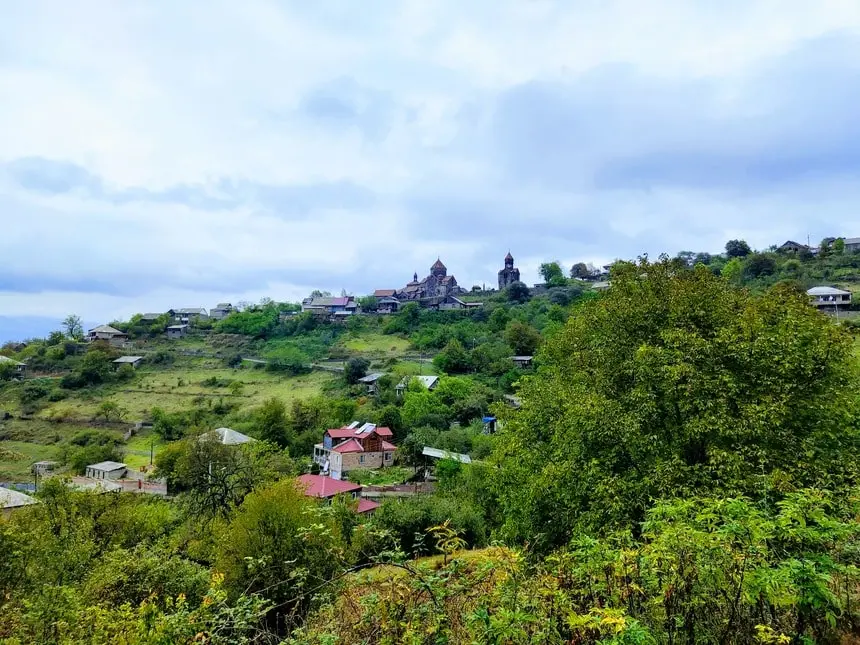
In the course of Armenian history covering millennia, the history of the village of Haghpat occupies a position of utmost importance. It has been written through the pro-state activities of Armenian kings and queens, the results of the struggles of princes and princesses, the prayers of religious figures and the power of scientists’ minds, the industriousness of the villagers, and by bestowing children upon the homeland.
In our days, the village of Haghpat, with its numerous historical and cultural monuments and picturesque nature, is considered a calling card of Armenia, and the Haghpat Monastery — a symbol uniting Armenians.
It is located in the Lori region of the Republic of Armenia, on the slopes of the Arajnaglukh and Surb Luys mountains. Armenia’s most abundant river, the Debed, flows from the northwest of the village, while the Acher River flows through the Haghpat Gorge from the west. On one side of Haghpat are forested mountains, and on the other side are the plateau and bottomless canyons. It is this wonderful landscape that for centuries has inspired Armenians to create miraculous monuments and cultural values, and to continue living there.
From Ancient Times to the Construction of the Monastery
Haghpat is one of the ancient settlements of Armenia, but its history is mainly presented starting from the 10th century. This circumstance has its clear reasons, which are primarily related to the construction of the famous Christian temple and, consequently, the opening of a new, significant page in history. The other reason is that the period of Haghpat village’s history during the B.C. era and the subsequent 1st to 9th centuries has been studied very little.
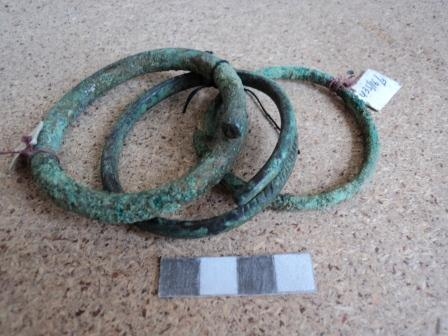
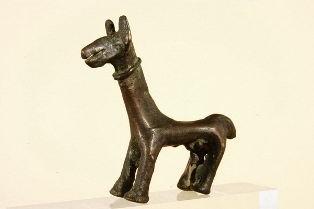
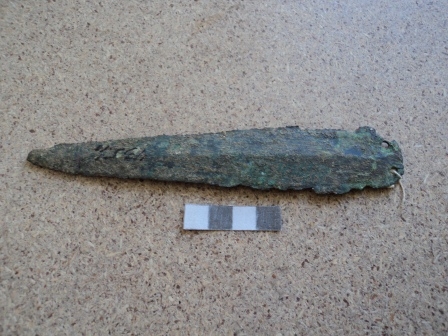
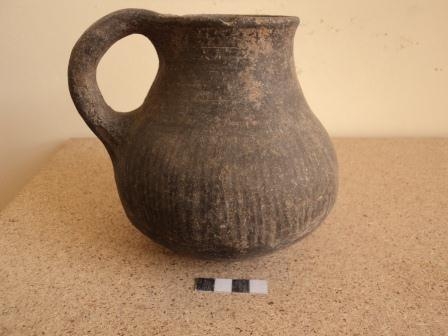
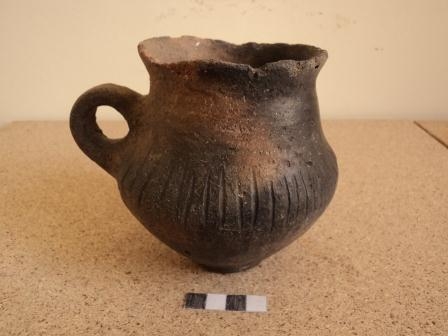
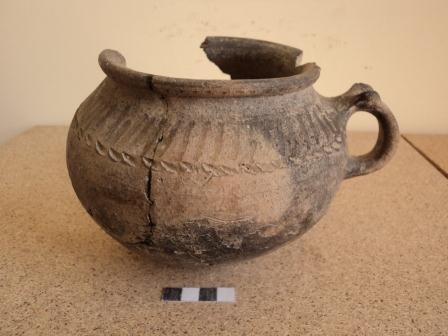
In ancient times, the territory of Haghpat was known by the name Surb Luys (Holy Light). Sites dating back to the 2nd to 1st millennia B.C. have been discovered there. One of them is the settlement located at the foot of Mount Surb Luys. The burial ground known as “Agravi Tapan” (Crow’s Ark) is attributed to the same period. As a result of very few excavations, a number of archaeological objects have been found in different parts of the village, including a bronze figurine of a standing horse dating to the beginning of the 1st millennium B.C., bronze snake-headed bracelets dating to the 12th to 9th centuries B.C., antimony buttons, clay jars and cups, a bronze spear blade and iron fragments, and an iron knife dating to the 9th to 6th centuries B.C.
It is known that Armenia’s famous Christian monastic complexes were built on the sites of Armenian temples of the pre-Christian faith. From this perspective, there are a number of claims that a pagan temple existed on the site of Haghpat Monastery.
With the foundation of the Haghpat Monastery in the 10th century, the name of the settlement became Haghpat, while the name Surb Luys remained as the name of the neighboring mountain.
The flourishing of the settlement in the 10th-14th centuries
Founding and Prosperity of Haghpat Monastery
The 10th century was a period of crucial events for Armenia. For around two centuries, the Bagratuni dynasty had restored the Armenian Kingdom on Armenian lands, leaving a significant mark on Armenian history. This influence is felt even to this day. Between 953 and 978, the King of Armenia was Ashot III the Merciful (Ashot G Oghormats), who was well-known by the title “the Pious.” His wife, Queen Khosrovanuysh, is famous for her extensive construction activities.
The year 976 became the starting point for the village of Haghpat and many subsequent events in Armenia. With the support of her husband, Queen Khosrovanuysh initiated the construction of the Saint Nshan (Surb Nshan) Church of Haghpat Monastery for the longevity of her sons, Smbat and Gurgen. In 978, Smbat became the King of Bagratid Armenia, known as Smbat II the Master of the Universe (Smbat B Tiezierakal), while Gurgen became the King of the Armenian Kingdom of Lori and the founder of the Kyurikian royal dynasty. The bas-reliefs of the two kings are carved on the exterior face of the eastern wall of St. Nishan Church. They are depicted standing opposite each other, holding a small model of the church in their hands. Queen Khosrovanuysh also donated one of the dynastic symbols of the Bagratunis to the church: a relic of the True Cross of Jesus Christ, which is kept there to this day.
The construction of the church lasted 15 years, followed by the building of other monuments within the monastic complex. Overall, Haghpat Monastery in its current form was completed during the 10th to 13th centuries. Through the initiative of queens, princes and princesses, and leaders of the monastery, the Great Gavit, the bell tower, the Hamazasp Gavit, the St. Gregory (Surb Grigor) and St. Mother of God (Surb Astvatsatsin) churches, the refectory, and the defensive walls were built; the famous scriptorium (matenadaran) and school of Haghpat Monastery were also established. It was a scientific, educational, and religious-cultural center of medieval Armenia, associated with the famous scientists, historians, and ecclesiastics of the time. These included Hovhannes Imastaser, Davit Gandzaketsi, Davit Kobayretsi, and others. The “Small Armenian Calendar” and numerous manuscripts were written and preserved in Haghpat, through which various events of Armenian history are known today.
As a result of all this, Haghpat Monastery became one of the most important institutions in Armenia. In 1064, it was proclaimed an episcopal see by King Kyurike I Bagratuni and remained in that status until 1836. Haghpat was one of the four monasteries of the Armenian Apostolic Church whose leader participated in the election of the Catholicos of All Armenians, and its clergy took part in the most important decisions of Armenia and the Armenian Apostolic Church.
Ահա ձեր տեքստի պրոֆեսիոնալ թարգմանությունները անգլերեն և ռուսերեն լեզուներով՝ պահպանելով բնագրի ոճը, պատմական եզրույթներն ու հատուկ անունների ճշգրտությունը։
The Kiurikian dynasty and Haghpat (10th-12th centuries)
The Kiurikians were a junior branch of the Bagratuni dynasty who ruled the Kingdom of Tashir-Dzoraget (the Armenian Kingdom of Lori) from the late 10th century to the beginning of the 12th century. The founder of the dynasty was Gurgen, the son of King Ashot III the Merciful of Bagratid Armenia, who was later called Kyurike. The royal dynasty was named Kyurikid after him, and his descendants became powerful protectors of Armenia’s northern gateways and patrons of culture.
The connection between the Kiurikians and Haghpat had deep political and spiritual roots, continuing throughout their reign and even beyond. Haghpat Monastery served as the dynasty’s spiritual center and royal sepulcher. To this day, the tombstones of the Kyurikid kings and representatives of their lineage remain preserved on the floor of the Great Gavit of the monastery. Their burial here testifies to the supreme respect this dynasty held for Haghpat Monastery, considering it their eternal resting place.
Haghpat experienced its Golden Age under the Kyurikid kings. In fact, the construction of the monastery’s first and main structure, the Church of Saint Nishan (Surb Nshan), was initiated by Queen Khosrovanush of Bagratid Armenia. After her death, the construction was completed by her son Kyurike, the founding king of the Kingdom of Tashir-Dzoraget. Thus, thanks to the activities of the Bagratuni-Kiurikians, Haghpat Monastery and its settlement became symbols of Armenian royal glory, and even after the fall of the kingdom, the monastic complex continued to play a major role in the political and religious life of Armenia.
The proclamation of Haghpat as an episcopal see in 1064 by King Kyurike II of Tashir-Dzoraget was not accidental. It aimed to preserve and strengthen the autonomy and spiritual independence of the Kingdom of Lori. From there, the spiritual life of the region was governed. The episcopal see of Haghpat continued its activities until 1836.
During a difficult period of fragmentation and instability within the Armenian Church, when Catholicos Gregory II Vakayaser had departed for Cilicia to devote himself to asceticism and translation work, Haghpat Monastery became a center for spiritual rebirth through the initiative of Armenian princes and King Kyurike II. In 1081, with the blessing of Catholicos Vakayaser and the approval of Manuchihr, the ruler of Ani (at a time Ani was under foreign rule), King Kyurike of Armenia invited the Catholicos of Caucasian Albania (the See of Gandzasar, a branch of the Armenian Church whose jurisdiction extended over the Armenian provinces of Gardman and Artsakh, and the lands east of the Kura River) to Haghpat. It was there that Barsegh I of Ani (Barsegh Anetsi) was ordained as Co-Catholicos and Vicar. Through this significant event, Haghpat emerged as one of the most vital centers of the Armenian Church. Although Barsegh was officially considered a co-adjutor until 1105, he effectively managed and regulated the national affairs of the Armenian Church from Ani, relying on the immense scholarly, religious, and political influence of Haghpat Monastery. In 1105, following the death of Catholicos Gregory II Vakayaser, Barsegh of Ani formally ascended the throne as the sole Catholicos of All Armenians, unifying all Armenian patriarchal sees under his leadership.
In 1185, Princess Mariam, the daughter of King Kyurike III of Lori, with the help of her sister Rusugan, built the gavit-sepulcher of the Kyurikid royal house in front of the Surb Nshan Church of Haghpat Monastery, which was later expanded in 1208 by Abbot Hovhannes Khachentsi.
Under the Kiurikians, Haghpat became one of the largest and leading educational and scientific centers of all Armenia, not just a religious one. In the 10th century, the School of Haghpat, often called a university, was opened. Initially, religious themes were studied there, and manuscript books were created and copied. In a short time, it became a powerful scientific center. Hovhannes Imastaser, a prominent medieval scientist, religious, and educational figure born in Gardman, received his education there. He later became the head of the Haghpat School. Under his leadership, the teaching of music, arts, calendar science, mathematics, and other fields was introduced. For the manuscripts created by the Haghpat School, the famous Library of Haghpat was built as early as the 11th century.
The representatives of the Kyurikid dynasty kept Haghpat under constant support and attention. During their reign and under their patronage, construction activities were also carried out by representatives of various Armenian noble houses. An example of this is the Zarni-Parni cave-fortress complex built by Prince Zareh in the 10th century in the Haghpat gorge.
The era of the Kiurikians was a period of empowerment and prosperity for Haghpat, when an ordinary monastic settlement was transformed into a cultural and spiritual giant of pan-Armenian significance, whose fame spread far beyond the borders of Armenia.
However, all this did not come easily. At various times, hostile forces attempted to conquer the Armenian Kingdom of Tashir-Dzoraget. In the early 11th century, the Seljuk Turks invaded the Armenian Highlands from the east. By 1064, led by their leader Alp Arslan, the Seljuk Turks launched a large-scale invasion of Lori. The devastation of the region was prevented only through the diplomatic efforts of King Kyurike II. However, in the following years, the Seljuk Turks continued their attacks, carrying out massacres of Armenians and causing widespread destruction. The monasteries of Haghpat and Sanahin were also plundered. The continuously weakening Kyurikyan Kingdom received its final blow from the Georgian King David the Builder, who invaded Armenia in 1118 and captured the then-capital of Tashir-Dzoraget, the Lori Fortress, along with its surrounding territories. Consequently, the Kyurikyans were forced to retreat to the eastern regions of their kingdom, where their status was reduced to that of local princes. Despite the political decline of the Tashir-Dzoraget Kingdom, Haghpat, founded by representatives of the Armenian Bagratuni royal dynasty, remained a powerful spiritual and cultural center of Armenia.
Dear reader, the continuation of the text will be added soon.