

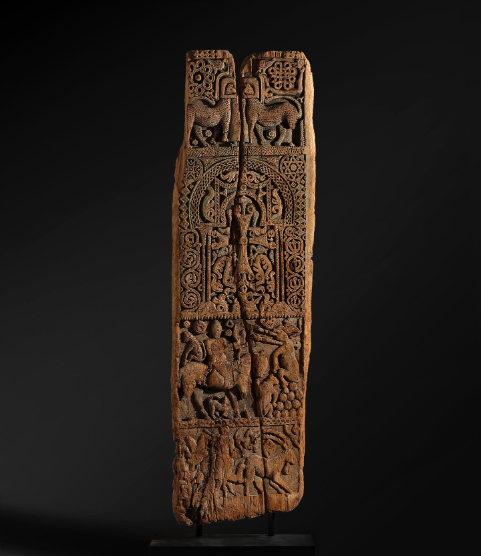
The Haghpat Monastery has a history spanning nearly a thousand years, during which numerous and diverse cultural works were created. Due to the absence of statehood or repeated enemy invasions, many of these artifacts were stolen and later ended up in different countries. One such exceptional example is the wooden door panel made in 1188 for one of the monastery’s churches, a fragment of which has survived to this day.
This unique work of art was put up for sale at an international auction in London in 2025. To acquire it and bring it back to Armenia, 175,360,000 Armenian drams (approximately 460,000 US dollars) were allocated.
Description
The door panel is made of walnut wood and measures 190 cm in height (top to bottom), 57 cm in width (right to left), and 12 cm in thickness. A crack (damage) runs vertically through the central part. The composition consists of four vertical figurative panels.
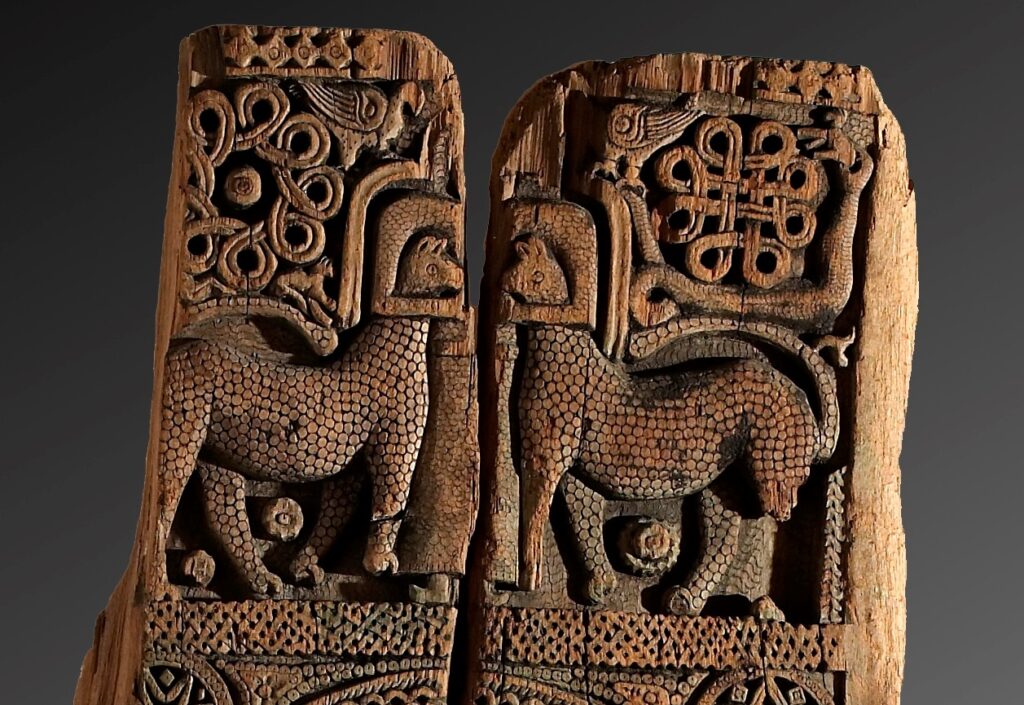
The upper panel depicts a man embracing two animals, presumably female Armenian mouflons. The facial features of the figure are damaged and no longer visible. The rectangular frame of the scene is adorned with ornamental patterns, a depiction of the struggle between an eagle and a serpent, and stylized symbols of eternity.
The second panel is executed in the style of Armenian khachkar art. It features a flourishing cross of the Armenian Apostolic Church, surrounded by various ornamental motifs and symbolic elements, including the Armenian six-pointed star.
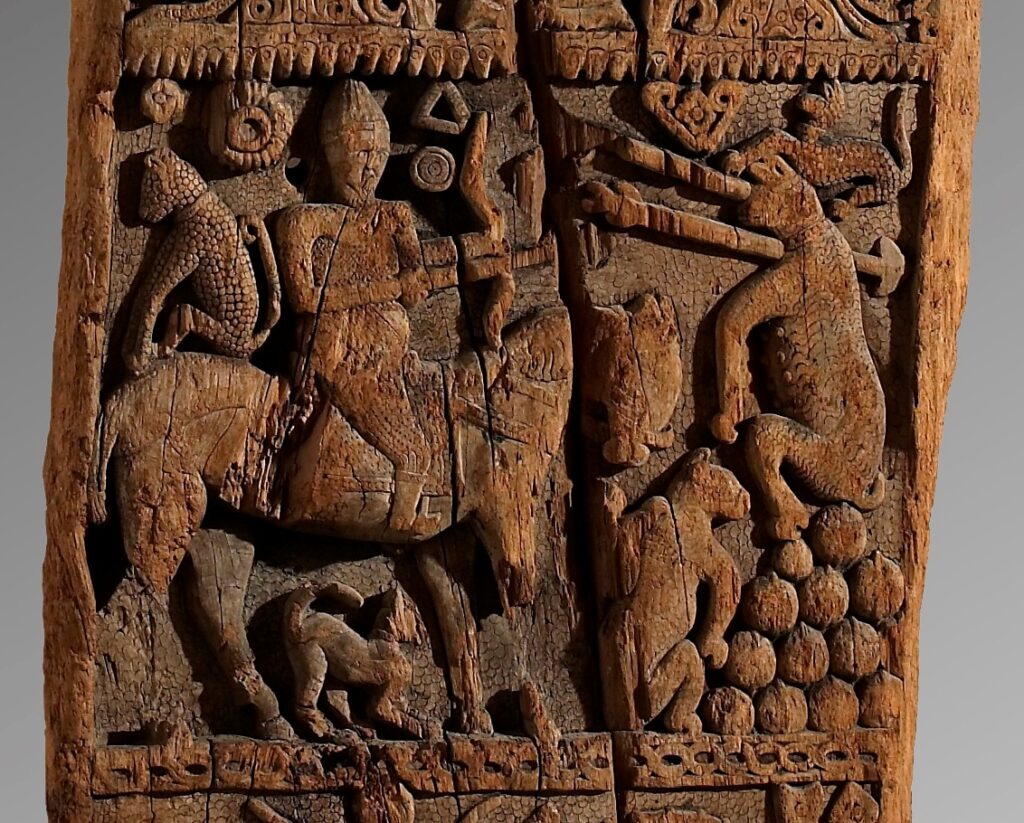
The third panel depicts a mounted horseman shooting an animal with a bow. In addition to the rider, other animals—presumably dogs—are shown near the horse and the rider’s feet. This section is further enriched with numerous large and small animals, symbols, and decorative patterns.
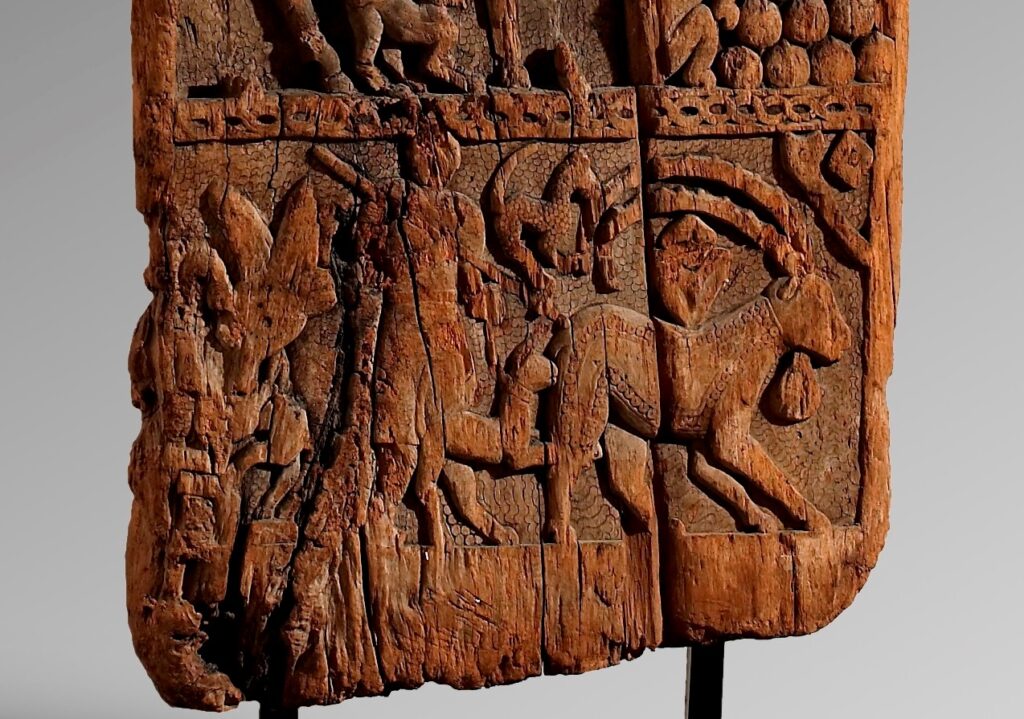
The fourth panel portrays a man holding a spear. Facing him are a male and a female Armenian mouflon. The scene is completed with ornamental motifs, a dog, and other accompanying elements.